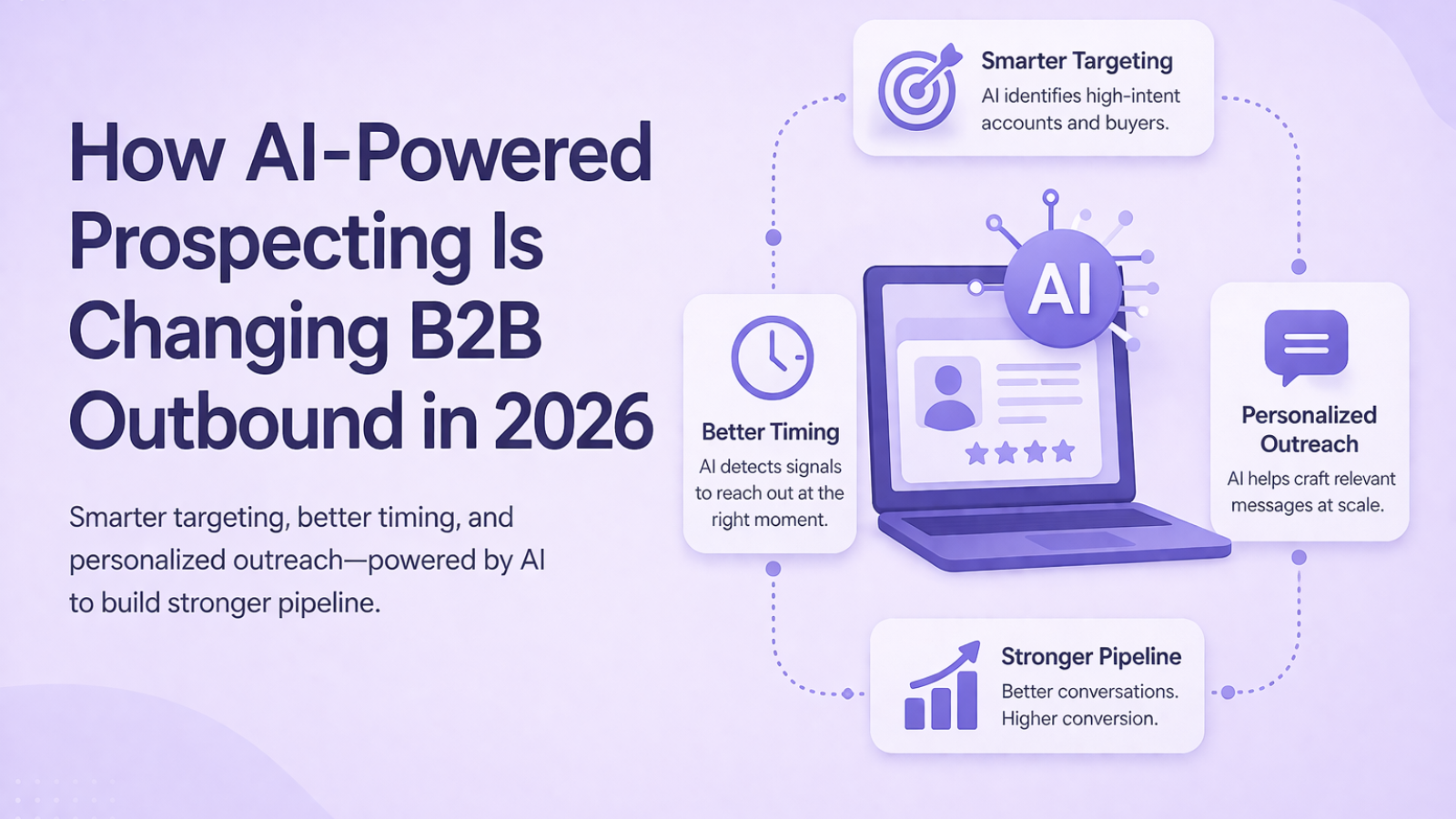

B2B outbound is changing fast. In 2026, the biggest shift is not simply that teams are using more AI. It is that AI is changing how prospecting decisions get made. Static lead lists, generic sequences, and volume-first outreach are losing ground to signal-based targeting, real-time prioritization, and more relevant personalization. That shift matters because buyers are more self-directed than ever: Gartner found that 61% of B2B buyers prefer a rep-free buying experience overall, and 73% actively avoid suppliers that send irrelevant outreach.
Why traditional outbound is losing effectiveness
The old outbound model was built around scale: build a list, launch a sequence, and hope enough prospects reply. That approach is weaker now because buyers do most of their evaluation before they ever engage a seller. According to 6sense’s 2025 Buyer Experience Report, buyers execute roughly two-thirds of their journey before talking to sellers, and SDR/BDR outreach plays only a minimal role in determining the point of first contact. In the same research, 94% of buying groups ranked preferred vendors before first contact, and they ultimately bought from that preliminary favorite 77% of the time.
That means outbound teams have less room to win buyers with generic persistence alone. By the time a prospect replies, they may already have a shortlist, a preferred vendor, and a clearer view of what they want. AI-powered prospecting helps address that reality by improving who gets contacted, when they get contacted, and what message they receive.
From static lists to live signals
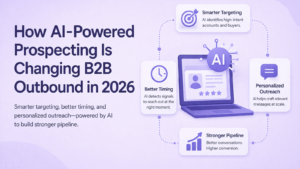
The most important change AI brings to B2B outbound is the move from static lead databases to live prospecting signals. Instead of relying only on firmographics and job titles, AI tools can help teams prioritize accounts based on intent data, engagement patterns, CRM activity, website behavior, content consumption, and buying-stage clues. This matters because 6sense found that buying timelines are compressing, while buyers are choosing winners earlier in the process. In that environment, timing becomes a competitive advantage.
In practice, AI-powered prospecting lets teams focus on accounts showing real momentum rather than treating every contact as equally likely to convert. That improves outbound efficiency because reps spend less time chasing cold names and more time engaging accounts that already show signs of movement.
AI is making personalization more practical
Personalization has always mattered in B2B outbound, but AI is making it more scalable. Gartner’s data shows that buyers actively resist irrelevant outreach, which means personalization is no longer a “nice to have.” It is basic outbound hygiene. AI can help prospecting teams tailor copy to industry, role, account context, buying-stage behavior, and recent engagement without forcing reps to write every message from scratch.
This does not mean AI should send untouched copy at scale. The better use case is assisted relevance: AI drafts the first layer, and humans refine tone, credibility, and business context. That approach fits what many GTM teams are already doing more broadly. HubSpot’s 2025 State of Marketing AI Report found that 60% of respondents were either piloting or scaling AI on their teams, and 74% said AI would be very or critically important to marketing success in the next 12 months.
Better timing is becoming part of prospecting quality
AI-powered prospecting is also changing when outbound happens. This is increasingly important because buyers are moving earlier for specific reasons. 6sense found that 58% of buyers engaged sellers sooner in order to evaluate AI capabilities, and 62% engaged earlier because of economic uncertainty. In other words, outbound does not just need relevance. It needs timing that matches real buyer urgency.
That is where AI has real value. It can surface moments when outreach is more likely to matter, such as a spike in category research, repeat visits to decision-stage pages, or engagement from multiple stakeholders inside the same account. In B2B outbound, smart timing often beats high volume.
AI-powered prospecting is responding to AI-powered buying
There is also a deeper shift happening on the buyer side. Forrester says that in 2025, 61% of purchase influencers either had or planned to use a private genAI engine to support purchasing, and in 2026 at least one in five B2B sellers will be compelled to respond to AI-powered buyer agents with dynamic counteroffers. That means sellers are not just using AI internally. They are selling into a market where buyers themselves are becoming AI-assisted.
For outbound teams, this raises the bar. Prospecting has to be clearer, more evidence-based, and easier to validate. Vague value props and generic promises are less effective when buyers are cross-checking vendors with AI tools before replying.
What good AI-powered prospecting looks like in 2026
The best B2B teams are using AI-powered prospecting in a few specific ways:
- to prioritize high-intent accounts instead of broad lead pools
- to tailor messaging by role, company context, and buying stage
- to coordinate email, LinkedIn, and CRM signals in one workflow
- to identify better outreach timing based on real engagement patterns
- to support reps with recommendations, not replace human judgment entirely
That last point matters. AI improves outbound most when it acts like a decision-support layer, not a substitute for strategy. Buyers still want relevance, context, and credibility. AI helps teams get there faster, but human review is still what keeps outreach useful instead of robotic.
Final thought
In 2026, AI-powered prospecting is changing B2B outbound by shifting it from activity-led outreach to intelligence-led outreach.
The winners will not be the teams sending the most messages. They will be the teams using AI to identify the right accounts, respond to the right signals, and start the right conversations earlier.
Because the future of B2B outbound is not more automation for its own sake.
It is better precision, better timing, and better pipeline.