
For years, conversations about AI infrastructure revolved around one thing: GPUs.
The bigger the GPU cluster, the bigger the AI advantage.
But in 2026, a different component is quietly becoming one of the biggest challenges for enterprise IT teams.
Memory.
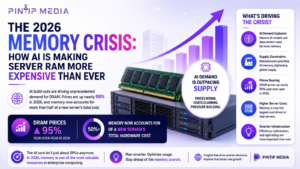
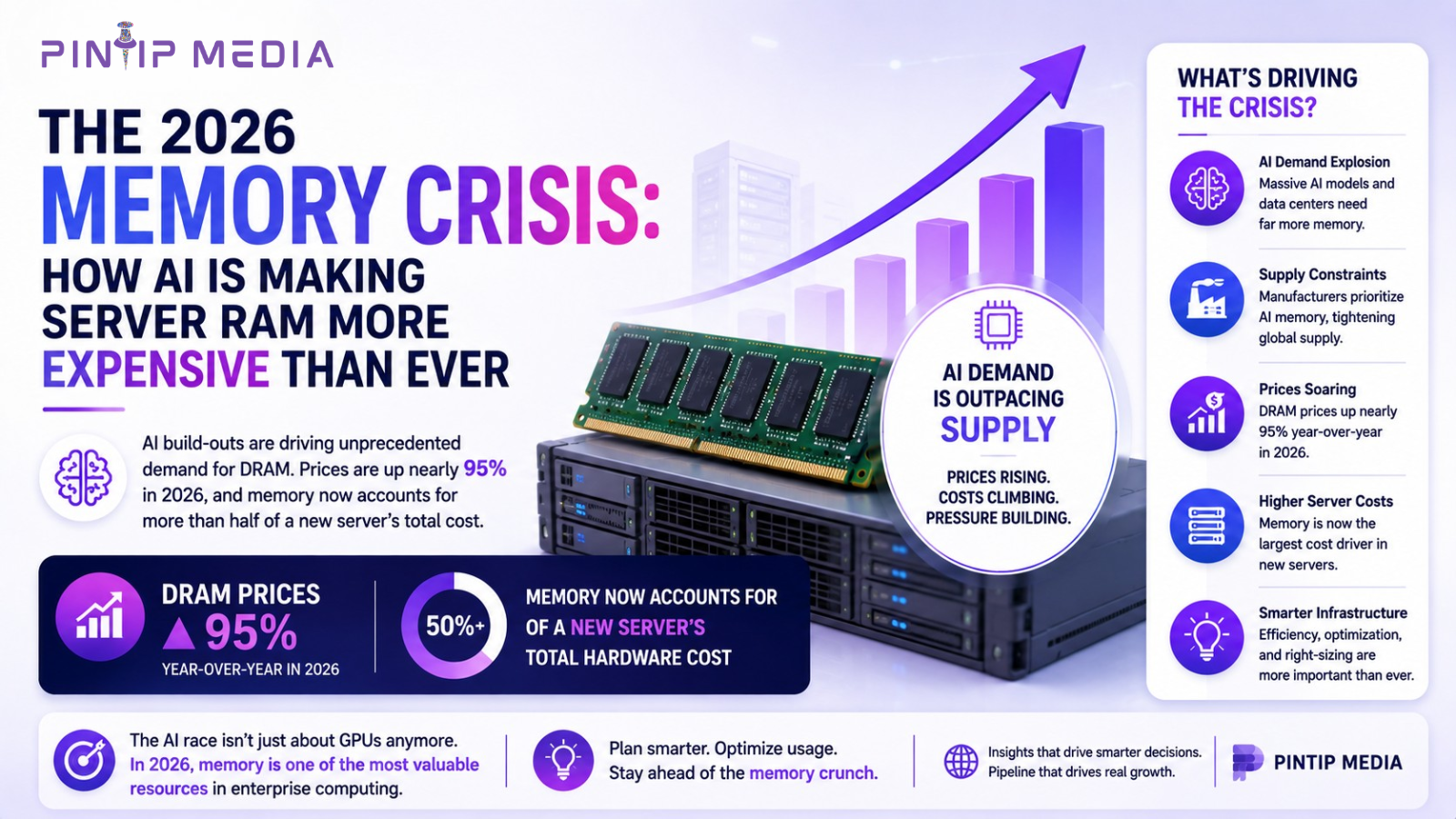
Server DRAM prices have climbed dramatically this year as AI infrastructure investments continue at an unprecedented pace. What’s surprising isn’t just the increase in memory prices it’s the growing impact those costs are having on the total price of building new servers. Industry analysts report that soaring AI demand has pushed DRAM prices sharply higher, forcing enterprises to rethink infrastructure budgets.
AI Is Consuming More Memory Than Ever
Modern AI workloads don’t just need powerful processors.
They require enormous amounts of high-speed memory to train models, process billions of parameters, and serve millions of real time inference requests.
As hyperscalers continue expanding AI data centers, memory manufacturers are prioritizing production for AI-focused applications, leaving traditional enterprise buyers competing for a much tighter supply.
The result?
Memory is no longer a supporting component.
It’s becoming one of the defining costs of enterprise infrastructure.
Why This Matters Beyond the Data Center
Rising memory prices don’t only affect cloud providers.
Every organization planning to modernize its infrastructure could feel the impact.
Whether you’re deploying private AI models, refreshing virtualization clusters, expanding analytics platforms, or investing in high-performance computing, higher DRAM costs can significantly increase project budgets and extend procurement timelines.
For many IT leaders, the conversation is shifting from “Which server should we buy?” to “How do we maximize every gigabyte we already have?”
Smarter Infrastructure Is Becoming a Competitive Advantage
The companies adapting fastest aren’t simply buying more hardware.
They’re becoming more efficient.
Organizations are consolidating workloads, optimizing memory utilization, adopting intelligent resource scheduling, and carefully prioritizing AI projects that deliver measurable business value.
Instead of scaling infrastructure endlessly, they’re focusing on scaling intelligently.
That mindset is becoming just as important as choosing the latest processors.
The Bigger Picture
The memory shortage is also changing vendor strategies.
Major cloud providers are locking in longterm supply agreements, while hardware manufacturers continue investing in new production capacity. Even so, industry leaders warn that supply constraints could remain for years because building new memory fabrication capacity is both capital intensive and time-consuming.
In other words, this isn’t a short-term pricing spike.
It’s a structural shift driven by the AI era.
Final Thoughts
The AI race isn’t only about who owns the fastest GPUs anymore.
It’s about who can secure the infrastructure needed to support them.
In 2026, memory has become one of the most valuable resources in enterprise computing and one of the biggest factors influencing AI investment decisions.
As AI adoption accelerates, the organizations that treat infrastructure planning as a strategic advantage not just an IT expense will be better positioned to innovate without being caught off guard by the next wave of hardware costs.
Because sometimes, the biggest disruption isn’t the processor everyone is talking about.
It’s the component quietly powering every AI workload behind the scenes.