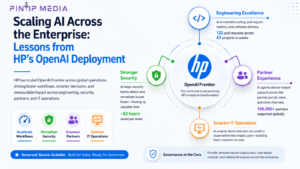

Artificial intelligence is no longer a side project for enterprise organizations it’s becoming part of everyday operations. HP’s recent expansion of OpenAI across its global business is a great example of what happens when AI moves beyond experimentation and becomes a core business capability.
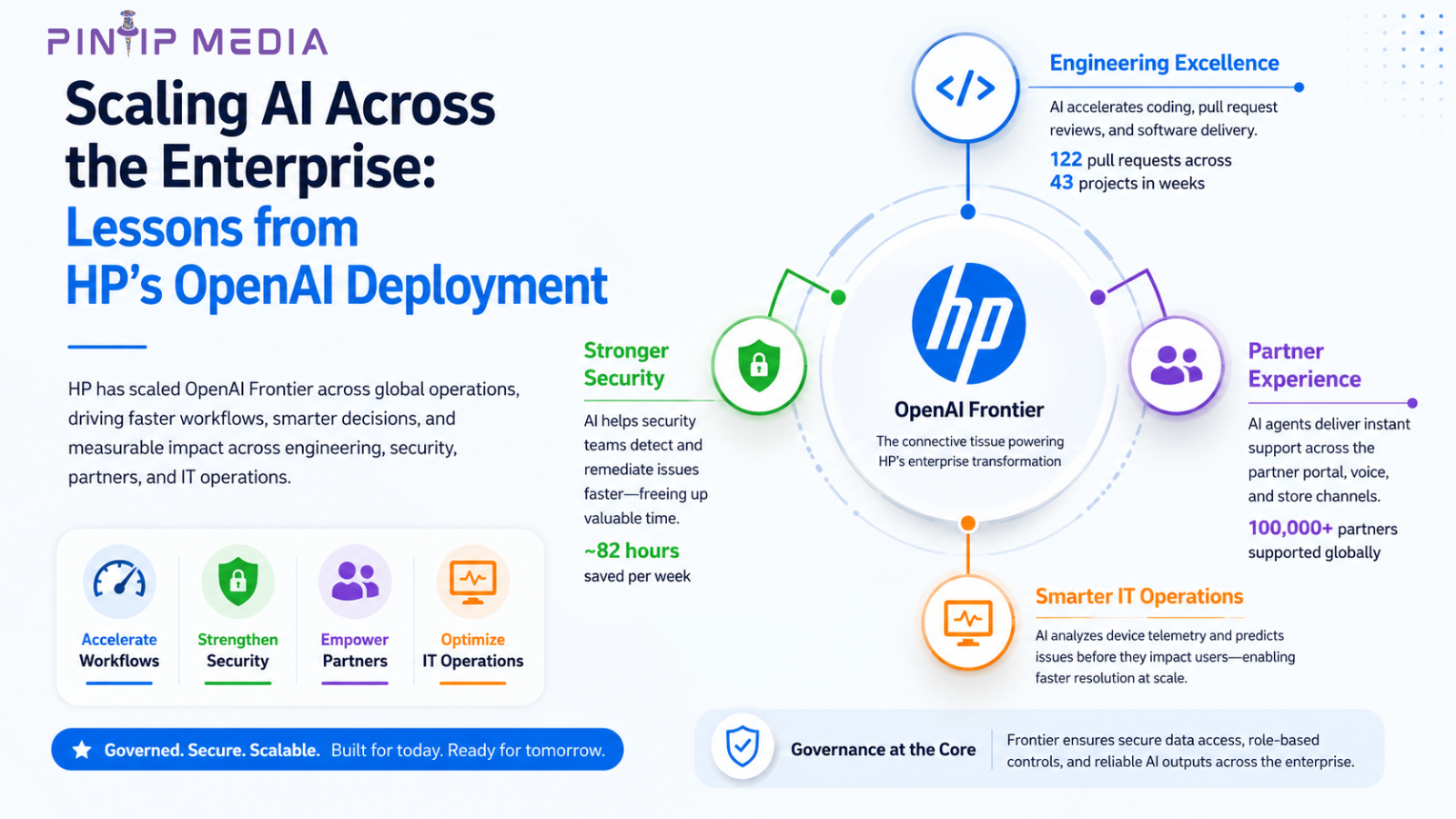
Instead of treating AI as another productivity tool, HP has integrated it into engineering, cybersecurity, partner support, and IT operations. The result? Faster workflows, smarter decision-making, and teams that can spend more time solving complex problems instead of repetitive ones.
Moving Beyond the Pilot Phase
Like many organizations, HP didn’t jump straight into a company-wide rollout. It started with pilot programs that focused on software engineering and security. Once those projects demonstrated measurable improvements, the company expanded AI across multiple business functions.
This phased approach highlights an important lesson for enterprises: validate value first, then scale with clear governance and standardized processes.
Accelerating Software Development
One of the biggest wins came from engineering teams. AI is helping developers review code, process pull requests, identify issues earlier, and reduce the delays that typically slow software releases.
Instead of constantly switching between projects, developers can rely on AI to handle repetitive tasks, summarize code changes, and assist with planning. That means less time spent on manual reviews and more time building better products.
Strengthening Cybersecurity
Security teams are also seeing major benefits.
Tasks that previously required weeks of manual investigation can now be completed much faster with AI assisted analysis. By automating repetitive vulnerability reviews and log analysis, security professionals can focus on identifying high-risk threats and improving overall resilience.
It’s not about replacing cybersecurity experts it’s about giving them more time for the work that truly requires human judgment.
Supporting a Global Partner Network
Managing a worldwide partner ecosystem is no small challenge.
With over 100,000 partners accessing HP’s portal, AI helps deliver faster answers, automate common support requests, and simplify everyday interactions. Whether it’s navigating programs, checking inventory, or resolving warranty questions, AI-powered assistance reduces wait times while improving the overall experience.
Smarter IT Operations
HP is also using AI to monitor and manage thousands of connected devices across enterprise environments.
Instead of waiting for users to report issues, AI analyzes telemetry data to detect application failures, connectivity problems, and hardware performance issues before they become larger disruptions.
This proactive approach allows IT teams to resolve problems faster while keeping business operations running smoothly.
Governance Makes AI Scalable
One of the biggest takeaways from HP’s deployment isn’t the technology itself it’s the governance behind it.
As organizations adopt AI across departments, they need clear controls around data access, permissions, APIs, and model usage. Without that structure, disconnected AI initiatives can quickly create security risks and inconsistent results.
HP’s approach demonstrates that successful enterprise AI isn’t just about deploying powerful models. It’s about ensuring every AI interaction is secure, monitored, and aligned with business objectives.
Final Thoughts
HP’s OpenAI deployment shows that enterprise AI delivers the greatest value when it’s woven into everyday workflows not treated as a standalone experiment.
From accelerating software development to strengthening cybersecurity, supporting partners, and improving IT operations, the company is creating a scalable foundation for future innovation.
For organizations looking to expand AI adoption, the lesson is clear: start with measurable use cases, build strong governance, and scale with purpose. When implemented strategically, AI becomes more than a productivity boost it becomes a competitive advantage.