
Cold outreach can be a powerful way to connect with prospects, generate leads, and grow your business. But if your emails keep landing in spam, your campaign performance drops and your domain reputation suffers.
Your domain reputation tells email providers whether your emails are trustworthy. A poor reputation can cause your messages to go straight to spam, even when your offer is relevant. The good news is that you can protect your domain health by following the right outreach practices.
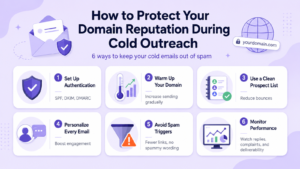
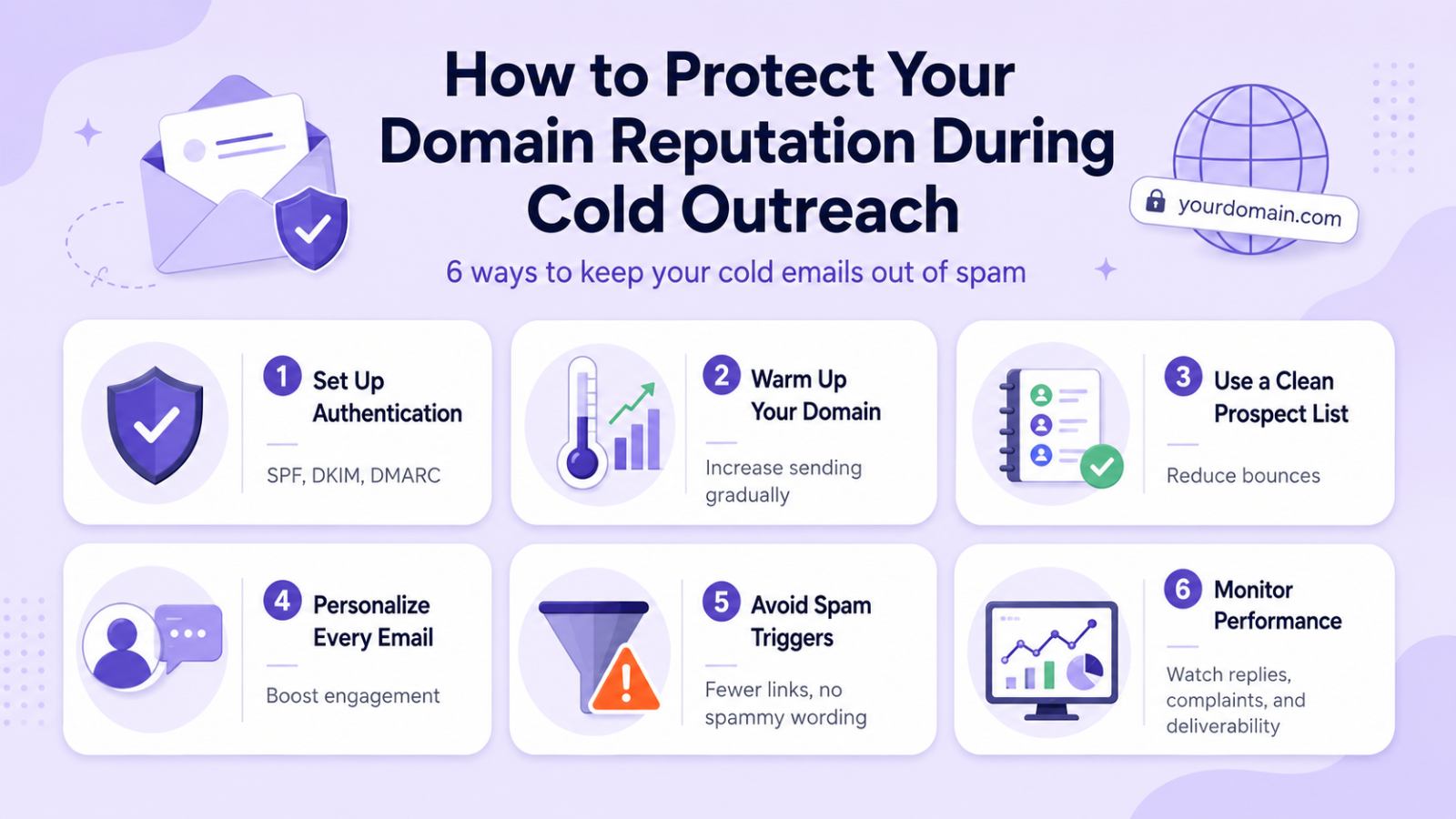
1. Set Up Email Authentication
Before sending cold emails, make sure your domain is properly authenticated. The three key records are:
- SPF: Confirms which servers can send emails from your domain.
- DKIM: Adds a digital signature to prove your email is legitimate.
- DMARC: Helps prevent spoofing and tells email providers how to handle suspicious messages.
Without these records, inbox providers may treat your emails as risky.
2. Warm Up Your Email Domain
Never start cold outreach by sending hundreds of emails per day. Sudden high-volume sending looks suspicious and can damage your sender reputation.
Start with a low daily sending volume and increase it gradually. This helps email providers see your domain as active, consistent, and trustworthy.
3. Use a Clean Prospect List
A poor-quality email list can quickly hurt your domain reputation. High bounce rates signal that you are sending to invalid or outdated contacts.
Before launching a campaign, verify your prospect list and remove invalid, duplicate, or inactive email addresses. A clean list improves email deliverability and protects your domain health.
4. Personalize Your Cold Emails
Generic mass emails often trigger spam filters and get ignored by prospects. Personalization improves engagement, which helps your sender reputation.
Use the prospect’s name, company, industry, or a specific pain point. Keep your message short, relevant, and focused on the recipient’s needs.
5. Avoid Spam Triggers
Certain email practices can increase the chances of landing in spam. Avoid:
- Too many links
- Heavy images or attachments
- Misleading subject lines
- Excessive capital letters
- Overly promotional words like “guaranteed,” “free,” or “urgent”
A simple, text-based email usually performs better for cold outreach.
6. Monitor Engagement and Complaints
Email providers track how people interact with your messages. Replies, opens, and clicks can improve your reputation, while spam complaints and unsubscribes can hurt it.
Track your campaign metrics regularly. If spam complaints rise or reply rates drop, pause your campaign and review your list quality, message content, and sending volume.
Conclusion
Protecting your domain reputation during cold outreach is essential for successful email deliverability. Set up SPF, DKIM, and DMARC, warm up your domain, use verified prospect lists, personalize your emails, and avoid spammy content.
A healthy domain helps your emails reach the inbox, improves response rates, and makes your outreach campaigns more effective over time.