
Introduction to ESP in B2B Email Marketing
Email remains one of the most reliable B2B marketing channels. However, scaling email campaigns manually creates inefficiencies. Email Service Providers (ESPs) solve this challenge with automation and data-driven capabilities. As a result, businesses achieve consistent growth without increasing manual effort.
What is an ESP and Why It Matters
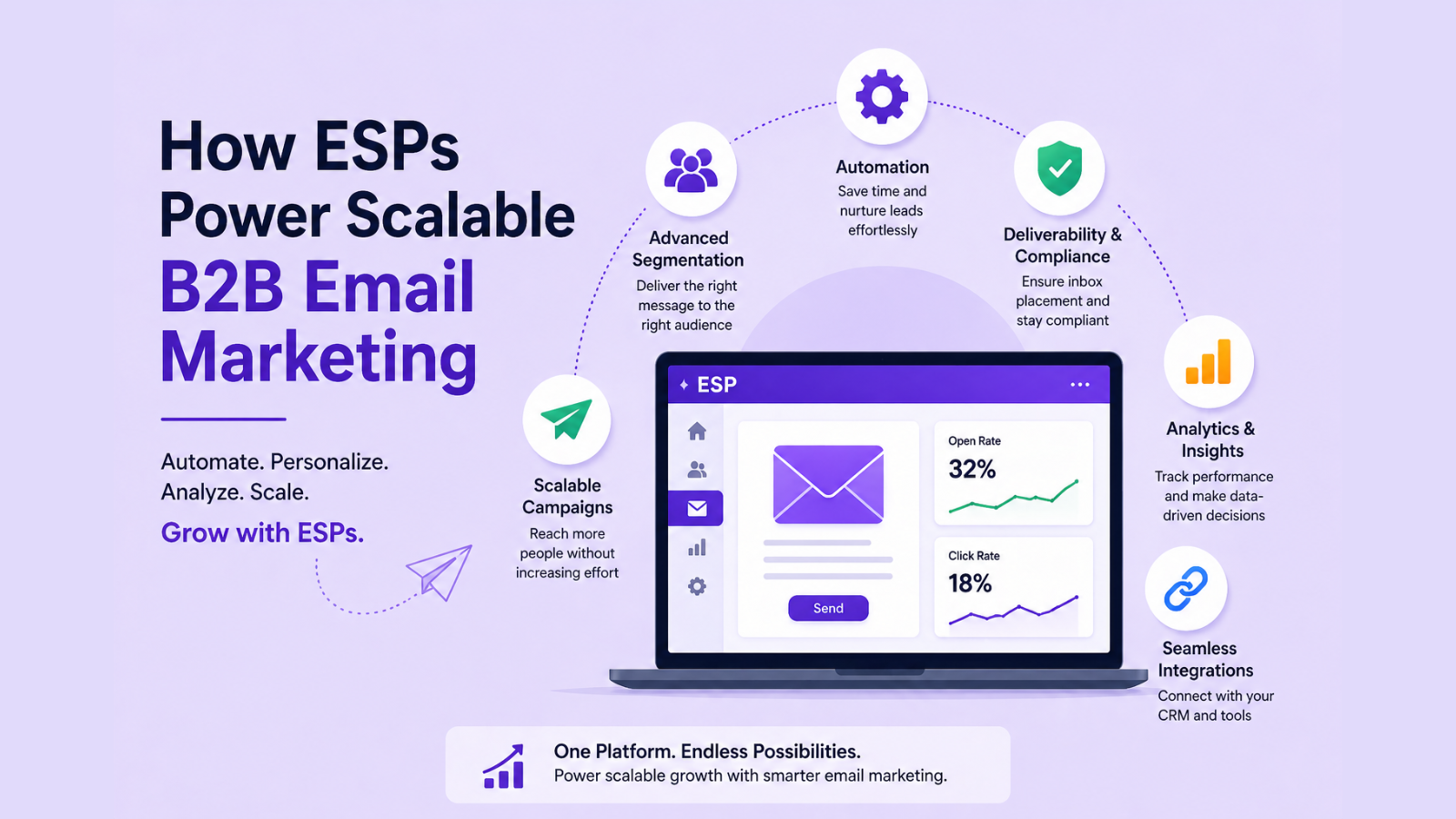
An Email Service Provider is a platform that manages email campaigns at scale. It handles sending, tracking, and optimizing emails. Moreover, ESPs ensure high deliverability and compliance. Therefore, B2B marketers rely on ESPs to maintain performance and consistency.
Automation Enables Scalable Campaigns
Automation sits at the core of ESP functionality. It allows businesses to send emails based on user behavior. For instance, leads receive targeted messages after specific actions. Consequently, marketers nurture prospects without constant manual input. This creates a scalable and repeatable process.
Advanced Segmentation Drives Personalization
Generic emails no longer perform well in B2B marketing. ESPs offer advanced segmentation tools. These tools group audiences based on behavior, industry, or engagement. As a result, businesses deliver personalized messages. This improves open rates and increases conversions.
Improved Deliverability and Compliance
Email deliverability determines campaign success. ESPs manage sender reputation and authentication protocols. Additionally, they ensure compliance with global email regulations. Therefore, emails land in inboxes instead of spam folders. This directly impacts campaign effectiveness.
Data and Analytics Power Smarter Decisions
ESPs provide detailed analytics on campaign performance. Marketers track open rates, click rates, and engagement levels. Moreover, real-time data helps optimize campaigns instantly. Consequently, businesses refine strategies and improve ROI over time.
Seamless Integration with B2B Tech Stack
Modern ESPs integrate easily with CRM and marketing tools. This creates a connected ecosystem for data flow. For example, lead data syncs across platforms automatically. As a result, teams align sales and marketing efforts effectively.
Cost Efficiency and Resource Optimization
Scaling email marketing without an ESP increases costs. Manual processes require more time and resources. However, ESPs reduce operational effort through automation. Therefore, businesses achieve higher output with fewer resources.
A/B Testing for Continuous Optimization
Testing plays a crucial role in email marketing success. ESPs allow marketers to test subject lines, content, and timing. Consequently, teams identify what works best. This leads to continuous improvement in campaign performance.
Final Thought
ESPs transform how B2B companies approach email marketing. They enable automation, personalization, and data-driven strategies. Moreover, they ensure scalability without compromising efficiency. As a result, businesses drive sustainable growth and stronger engagement.