
In 2026, appointment generation is no longer about sending more emails, making more calls, or adding more names to a list.It is about building a B2B sales funnel that connects the right audience, the right message, and the right timing.Many companies still struggle with appointment setting because they focus too heavily on outreach volume and not enough on buyer intent, qualification, and funnel design. If you want more qualified meetings in 2026, you need a funnel that is structured to attract, filter, nurture, and convert prospects efficiently. Here is how to build an appointment generation funnel for B2B sales that actually works.
What Is Appointment Generation in B2B Sales?
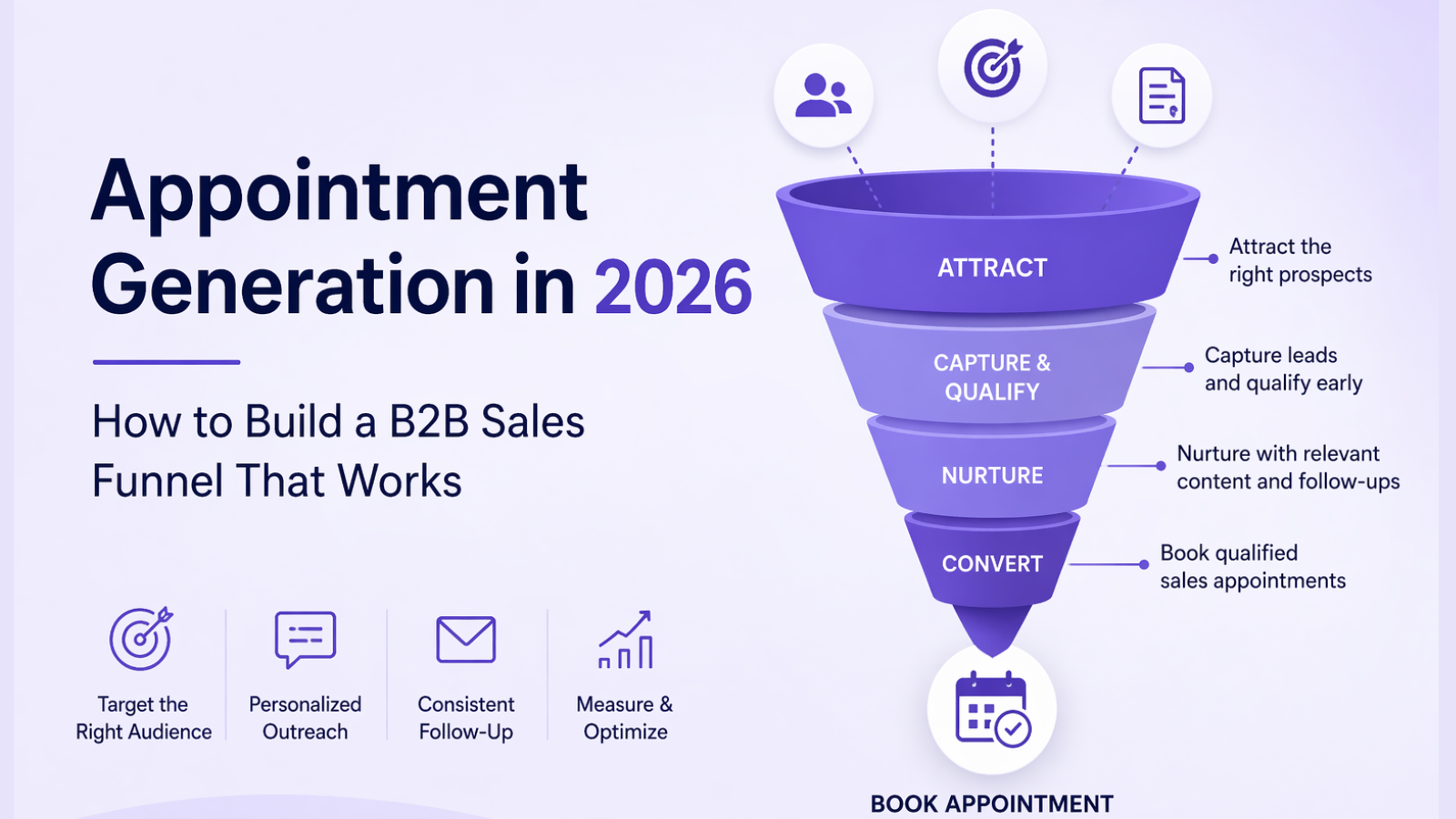
Appointment generation is the process of moving potential buyers through a funnel until they are ready to book a sales conversation. The goal is not just to get meetings. The goal is to generate qualified appointments with prospects who match your ideal customer profile and have a real reason to talk. A strong appointment generation funnel helps your team:
- attract better-fit prospects
- qualify leads earlier
- improve reply rates
- reduce wasted sales time
- book more relevant meetings
Why Appointment Generation Looks Different in 2026
B2B buyers are more informed than ever. Before they agree to a call, they often research your company, compare alternatives, review your content, and evaluate whether your solution fits their priorities.That means your funnel must do more than push cold outreach. It must create trust and capture intent.
In 2026, the most effective B2B appointment generation strategies are built around:
- clear ideal customer profiles
- signal-based targeting
- personalized outreach
- content that supports buyer research
- fast lead qualification
- consistent follow-up
Step 1: Define Your Ideal Customer Profile
Every appointment generation funnel starts with clarity. Before you build campaigns, define exactly who you want to reach:
- industry
- company size
- location
- revenue range
- buyer role
- pain points
- trigger events
When your ICP is too broad, your messaging becomes generic. When your ICP is specific, your funnel becomes more relevant and your meetings become more qualified.
Step 2: Attract the Right Prospects
The top of your funnel should bring in target accounts, not random traffic.
Use a mix of:
- SEO content
- LinkedIn content
- outbound email
- paid campaigns
- referral channels
- webinar or lead magnet offers
For better results, focus on prospects already showing interest. These may include people visiting your pricing page, downloading a case study, attending a webinar, or engaging with bottom-funnel content.
This is where modern appointment generation improves. Instead of contacting everyone, you prioritize people and companies with visible buying signals.
Step 3: Build a Lead Capture and Qualification Layer
Once prospects enter your funnel, you need a way to capture and qualify them quickly.
Your lead capture points might include:
- contact forms
- demo request pages
- newsletter sign-ups
- content download forms
- chatbot conversations
But collecting contact details is not enough. You also need qualification criteria.
Ask:
- Does this company match our ICP?
- Is this the right decision-maker or influencer?
- Is there a visible pain point?
- Is there urgency or timing?
This step helps your sales team focus on quality instead of chasing every inbound or outbound response.
Step 4: Use Personalized Outreach That Feels Relevant
A B2B sales funnel that works in 2026 does not rely on generic templates.
Your outreach should connect with something real:
- a business challenge
- a buying signal
- a recent trigger event
- a content interaction
- a growth or hiring pattern
The best appointment setting messages are short, specific, and useful. They do not sound automated. They clearly answer three questions:
- Why this company?
- Why this person?
- Why now?
If your message cannot answer those, it will probably be ignored.
Step 5: Nurture Before You Push for the Meeting
Not every prospect is ready to book a call immediately. That is why nurturing matters. A simple follow-up system can move more leads toward a meeting without making your outreach feel aggressive.
Use:
- follow-up emails
- case studies
- educational content
- short LinkedIn touchpoints
- relevant proof points
- reminders tied to business outcomes
A good nurture sequence builds credibility and keeps your brand visible until the buyer is ready.
Step 6: Optimize the Booking Experience
If a prospect is ready to talk, do not create friction.
Make booking easy with:
- a simple call-to-action
- a clear calendar link
- fast response times
- a short confirmation flow
- reminder emails to reduce no-shows
Many funnels lose opportunities at the final stage because scheduling feels slow, confusing, or disconnected from the original outreach.
Step 7: Measure What Actually Matters
To improve appointment generation, track the full funnel, not just meeting volume.
Important metrics include:
- lead-to-meeting conversion rate
- reply rate
- qualified appointment rate
- no-show rate
- meeting-to-opportunity conversion
- source quality by channel
This helps you see whether your funnel is generating real sales opportunities or just filling calendars.
Common Mistakes to Avoid
If your appointment generation funnel is underperforming, one of these issues is often the reason:
- targeting too broad an audience
- relying on generic outreach
- ignoring buying signals
- poor qualification
- weak follow-up
- slow scheduling process
- focusing on quantity over quality
Fixing these basics often improves performance faster than adding more tools.
Final Thoughts
Appointment generation in 2026 is about building a B2B sales funnel that is targeted, relevant, and easy to convert through. The companies getting the best results are not simply increasing activity. They are creating better systems for attracting the right prospects, qualifying them earlier, nurturing them properly, and making it easy to book the right meeting at the right time. If you want a funnel that works, start with fit, improve relevance, and optimize every stage from first touch to scheduled call. That is how better appointment generation happens in 2026.