
Artificial intelligence is rapidly transforming how B2B organizations approach lead generation. From automated prospect research to predictive analytics, AI-powered tools are helping marketing and sales teams identify opportunities faster and work more efficiently. Yet despite the growing capabilities of automation, AI is not replacing lead generation professionals. Instead, it is reshaping how they work.
In today’s B2B landscape, the most successful organizations are not choosing between AI and human expertise—they are combining both.
The Growing Role of AI in Lead Generation
AI tools are increasingly integrated into modern marketing and sales technology stacks. These platforms help teams process large volumes of data and uncover insights that would otherwise take significant time to identify manually.
Common applications include:
- Prospect identification and segmentation using large datasets
- Predictive lead scoring to prioritize high-potential prospects
- Automated outreach assistance for email and messaging workflows
- Intent data analysis to identify companies actively researching solutions
- Customer behavior tracking across digital channels
By automating repetitive tasks and analyzing complex data patterns, AI allows teams to operate more efficiently and focus on higher-value activities.
Where AI Creates Real Value
One of the greatest advantages of AI is speed. In B2B environments, where large account lists and long buying cycles are common, AI helps organizations process information faster and identify patterns across multiple data sources.
For example, AI-powered tools can monitor engagement signals—such as website visits, content downloads, or industry searches—to highlight companies that may be entering a buying cycle. Sales teams can then prioritize these accounts rather than relying solely on broad outreach.
Similarly, AI can help refine lead scoring models by analyzing historical conversion data. This enables marketing and sales teams to focus their efforts on prospects most likely to become customers.
In these ways, AI strengthens the efficiency and accuracy of lead generation efforts.
The Limits of Automation
Despite its advantages, AI has clear limitations. B2B purchasing decisions are complex and often involve multiple stakeholders, long evaluation processes, and significant financial considerations.
AI can identify signals and automate outreach processes, but it cannot fully replace:
- Strategic thinking about market positioning
- Relationship-building with decision-makers
- Understanding organizational context and priorities
- Navigating complex buying committees
- Adapting conversations to nuanced business challenges
Lead generation in B2B is not purely transactional. It often depends on trust, credibility, and meaningful conversations—elements that remain deeply human.
The Human Advantage in B2B Lead Generation
Experienced sales and marketing professionals bring judgment, creativity, and contextual understanding that technology alone cannot replicate. They interpret signals, craft messaging that resonates with specific industries, and build relationships that influence long-term partnerships.
Human teams also play a critical role in aligning lead generation with broader business strategy. Deciding which markets to prioritize, how to position solutions, and how to approach complex accounts requires strategic insight beyond algorithmic predictions.
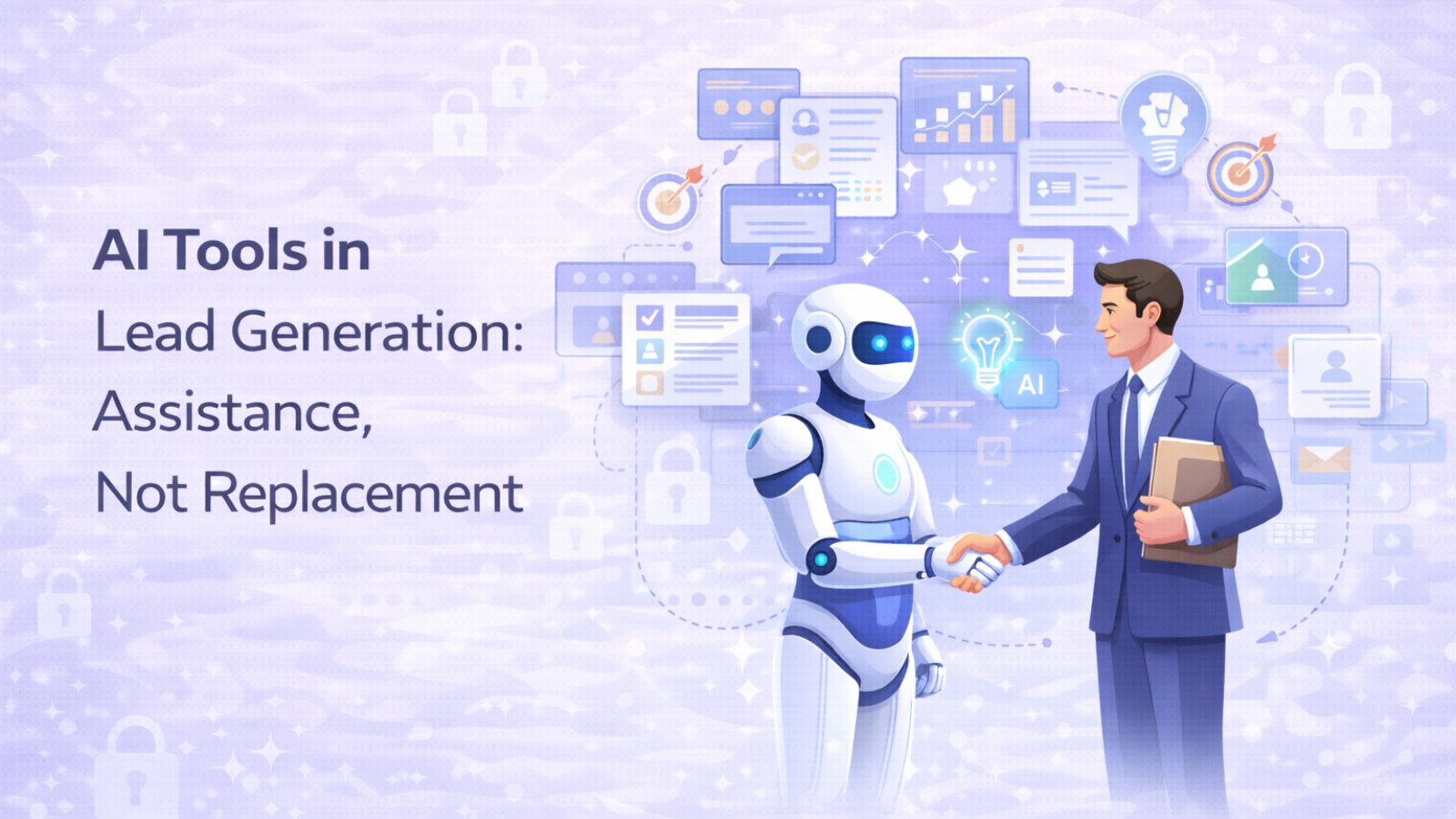
In many ways, AI provides the data—but people provide the direction.
A Collaborative Future
The future of lead generation will likely involve closer collaboration between AI tools and human expertise. AI will continue to handle tasks such as data analysis, pattern recognition, and workflow automation. Meanwhile, professionals will focus on strategic planning, personalized engagement, and relationship development.
Organizations that succeed in this environment will not rely entirely on automation. Instead, they will build systems where AI supports decision-making while human teams guide the overall approach.
Conclusion
AI tools are undeniably changing the mechanics of B2B lead generation. They make prospecting faster, data analysis deeper, and outreach more scalable. However, these technologies are best viewed as assistants rather than replacements.
Lead generation ultimately depends on understanding people, businesses, and complex decision processes. While AI can enhance efficiency and insight, human expertise remains essential for building trust and turning opportunities into lasting business relationships.
In the evolving B2B landscape, the strongest results will come from a balanced approach—where intelligent tools and human strategy work together.