
AI has changed the way B2B companies create content. A blog post that once took hours can now be drafted in minutes. LinkedIn captions, email sequences, ad copies, product descriptions, and sales messages can all be created faster with AI. For marketers and sales teams, this feels like a big advantage.
But here is the truth: creating content is not the same as creating pipeline.
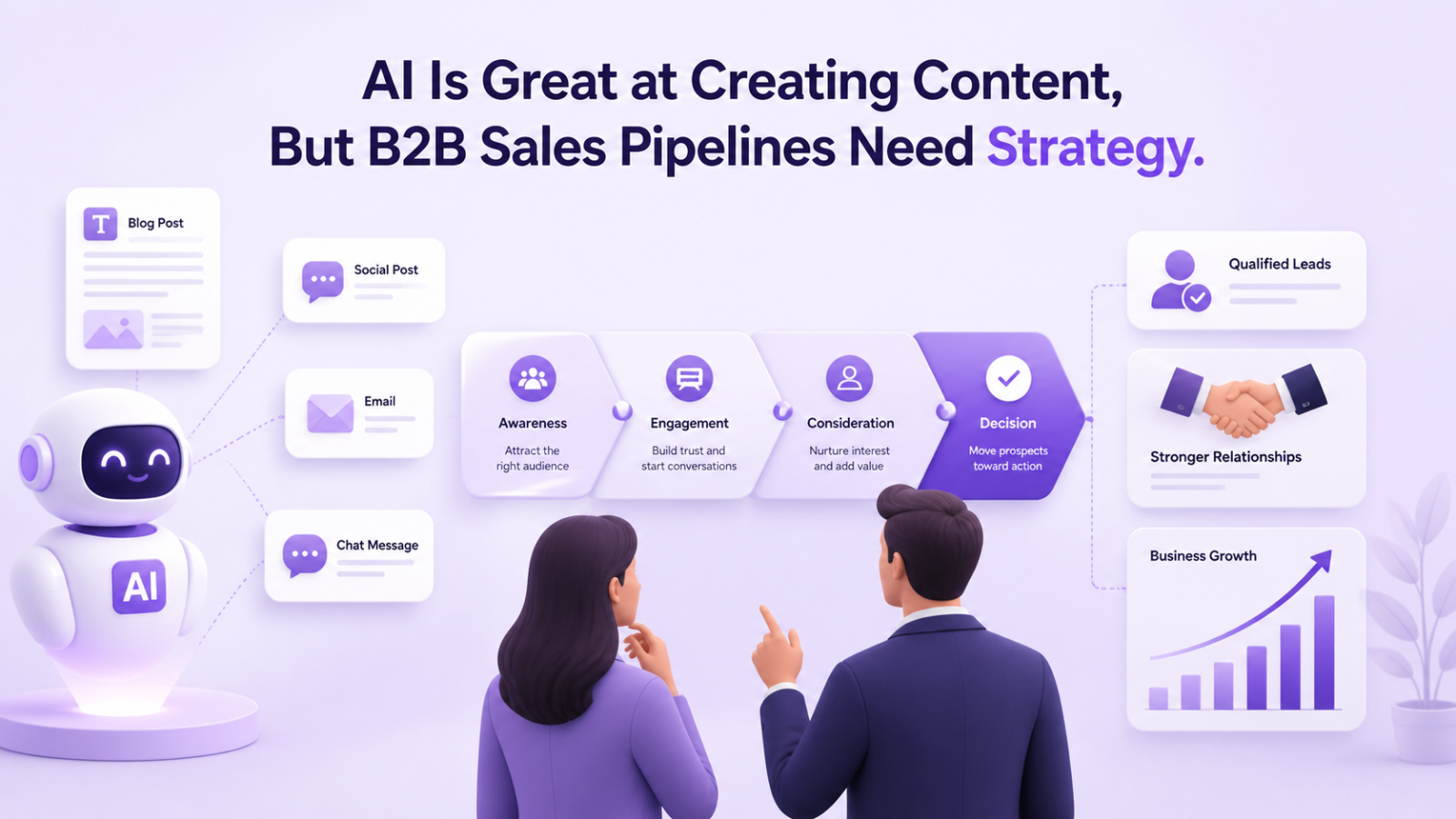
In B2B, the goal is not just to publish more. The goal is to attract the right audience, build trust, generate qualified leads, and move buyers closer to a sales conversation. This is where many businesses struggle.
AI can help you write a post, but it cannot automatically decide whether that post speaks to your ideal customer. It can create an email, but it cannot guarantee that the message is relevant to a decision-maker. It can generate content at scale, but without a clear strategy, that content may never turn into real business opportunities. This is why B2B companies need to think beyond AI content creation.
Content Gets Attention, Strategy Builds Pipeline
In today’s market, buyers are surrounded by content. Every brand is posting on LinkedIn, sending newsletters, publishing blogs, and running campaigns. With AI, the amount of content has increased even more.
But more content does not always mean better results. A generic AI-generated post may get published quickly, but it may not create trust. A blog may bring traffic, but it may not attract the right buyers. An email campaign may reach hundreds of prospects, but if the message feels cold or irrelevant, it will not convert. For B2B growth, content must be connected to a bigger sales strategy. That means every piece of content should answer a clear question:
Who is this for, what problem does it solve, and what should the buyer do next? Without that clarity, AI simply helps teams create more noise.
The Real Role of AI in B2B Sales
AI should not be used only as a writing tool. Its real value comes when it supports the full buyer journey. For example, AI can help identify customer pain points, create personalized outreach, summarize sales calls, generate follow-up emails, repurpose long-form content, and analyze campaign performance.
A single blog can become much more than a blog.
It can be turned into:
- LinkedIn posts
- Email nurture content
- Sales talking points
- Short video scripts
- Webinar ideas
- Lead magnet copy
- Follow-up messages for prospects
This is where AI becomes powerful. Not just in creating content, but in helping teams connect content with pipeline movement.
Why B2B Pipelines Still Need Human Strategy
B2B sales are complex. Buying decisions usually involve multiple people, longer sales cycles, budget discussions, trust-building, and repeated follow-ups. AI can support this process, but it cannot replace strategic thinking. A strong B2B pipeline still needs human judgment to understand:
- Which accounts are worth targeting
- What pain points matter most
- When a prospect is ready to engage
- What message will build trust
- How marketing and sales should work together
- Which content is actually influencing revenue
AI gives speed. Strategy gives direction. Without strategy, AI can create content quickly, but that content may not move anyone closer to a purchase decision.
How B2B Brands Can Use AI Better
To get real results from AI, B2B companies need a more structured approach.
First, they should define their ideal customer profile clearly. AI performs better when it knows exactly who the content is for.Second, sales and marketing teams should work together. Content should not be created only to fill a calendar. It should support real buyer conversations. Third, AI should be used for personalization. B2B buyers respond better when content feels relevant to their industry, role, challenges, and stage in the buying journey. Fourth, teams should track content performance inside the CRM. It is not enough to measure likes, views, or impressions. The real question is whether content is helping generate leads, meetings, opportunities, and revenue.
The Future of AI in B2B
The future of AI in B2B is not about creating the most content. It is about creating the right content, for the right buyer, at the right time. Companies that use AI only to produce more posts may get short-term visibility. But companies that combine AI with strategy will build stronger pipelines, better customer relationships, and more predictable growth. AI is great at creating content. But B2B sales pipelines need more than content. They need direction, timing, personalization, sales alignment, and trust. That is why the real advantage will belong to B2B brands that do not just use AI to write faster, but use AI to sell smarter.