
In the past, B2B marketing focused heavily on lead generation collecting contact details through forms, gated content, or cold outreach. However, as buyer behavior and digital channels evolve, many companies are shifting toward demand generation as a more sustainable growth strategy.
In 2026, successful B2B organizations are moving beyond simply collecting leads and instead focusing on building awareness, trust, and market demand long before a buyer fills out a form. This shift is driven by new buyer behaviors, advanced marketing technologies, and the increasing importance of brand influence in complex buying decisions.
Understanding the Difference Between Lead Generation and Demand Generation
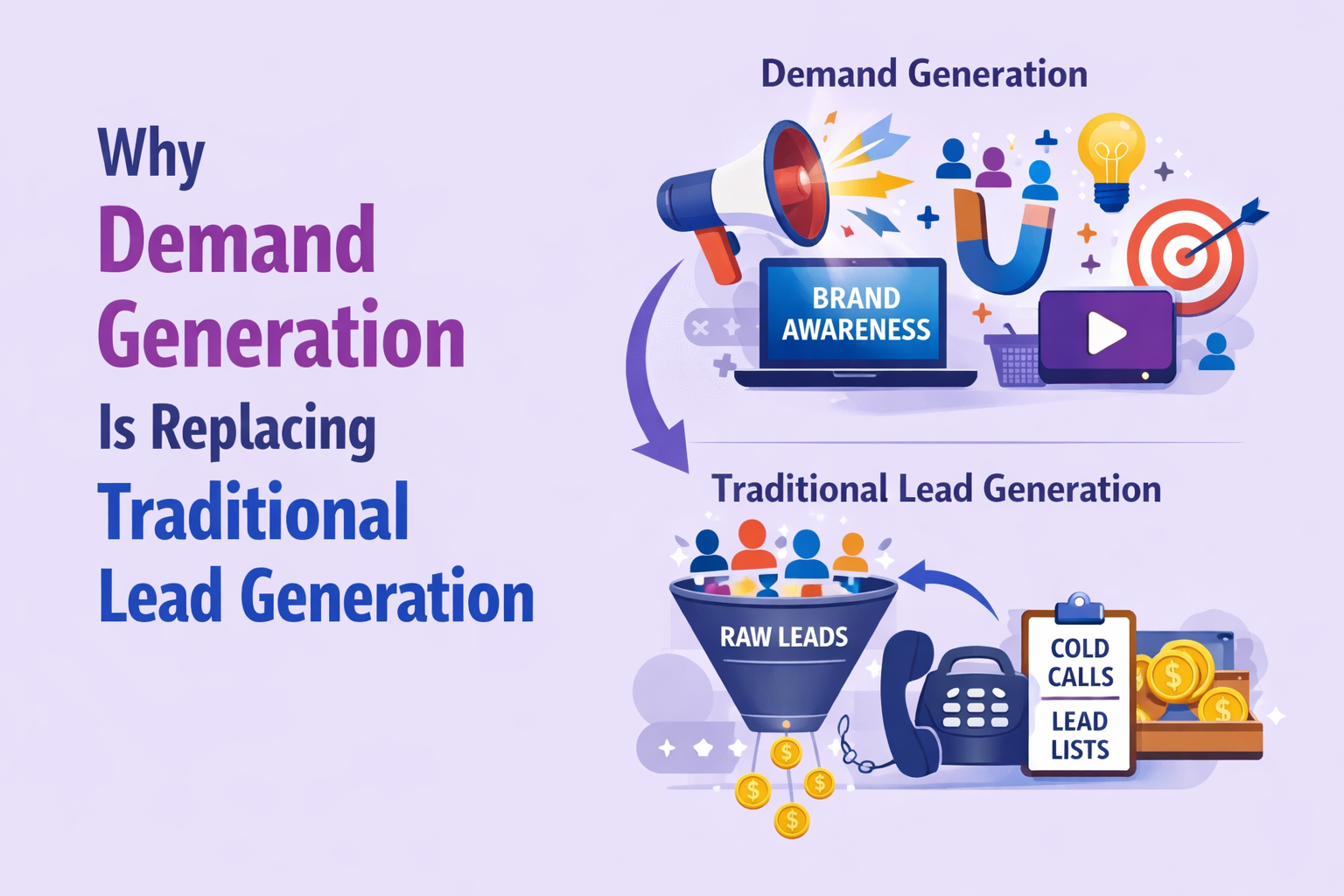
Lead generation focuses on capturing contact information from prospects who already show some level of interest. This typically happens through tactics such as landing pages, gated content, webinars, or paid advertising campaigns.
Demand generation, on the other hand, focuses on creating awareness and interest in your brand and solution before prospects actively start looking for vendors. It includes activities like educational content, thought leadership, social media engagement, webinars, and community building.
In simple terms:
- Lead generation captures demand
- Demand generation creates demand
Modern B2B marketing strategies increasingly prioritize demand generation because it builds long-term pipeline growth rather than short-term lead volume.
Why Demand Generation Is Replacing Traditional Lead Generation
1. Modern B2B Buyers Research Before Talking to Sales
Today’s buyers are more independent than ever. Decision-makers often complete a significant portion of their research before contacting a vendor.
This means prospects are already comparing solutions, reading reviews, and exploring educational content long before filling out a lead form. Demand generation helps companies influence buyers earlier in the decision-making process, ensuring the brand is visible during the research phase.
Instead of waiting for prospects to become leads, marketers focus on creating demand through valuable information and thought leadership.
2. Demand Generation Builds a Larger Future Market
Traditional lead generation usually targets people who are actively searching for a solution right now. However, research suggests that only a small percentage of buyers are actively in-market at any given time.
Demand generation focuses on building brand awareness among the much larger audience that may buy in the future. By educating and nurturing this audience early, companies create a stronger pipeline when those prospects eventually enter the buying stage.
This strategy ensures that when buyers are ready to purchase, your brand is already familiar and trusted.
3. AI and Data Are Enabling Smarter Demand Strategies
The rise of AI and marketing analytics is another reason demand generation is gaining momentum.
AI-powered tools now help marketers:
- Identify high-intent audiences
- Personalize content and campaigns
- Predict buyer behavior
- Optimize marketing channels
These technologies allow companies to run continuous demand-generation programs instead of isolated lead-generation campaigns. AI also helps marketers turn large datasets into actionable insights that improve audience targeting and engagement.
4. Demand Generation Improves Lead Quality
One of the biggest challenges with traditional lead generation is low-quality leads. Many prospects download gated content simply to access information, not because they are ready to buy.
Demand generation solves this problem by focusing on education and engagement first. By the time a prospect becomes a lead, they already understand the problem and trust the brand.
As a result:
- Sales teams receive more qualified leads
- Conversion rates improve
- Sales cycles become shorter
Instead of filling the funnel with names, demand generation focuses on building real buying interest.
5. B2B Marketing Is Moving Toward Revenue Impact
Another major shift in 2026 is the growing focus on pipeline and revenue metrics rather than vanity metrics.
Traditional lead generation often measures success through:
- Number of leads
- Cost per lead
- Form submissions
Demand generation focuses on deeper metrics such as:
- Pipeline contribution
- Customer acquisition cost
- Revenue attribution
- Customer lifetime value
This shift aligns marketing with real business outcomes instead of just marketing activity.
The Role of Lead Generation in the New Model
While demand generation is becoming the dominant strategy, lead generation is not disappearing.
Instead, it is evolving into a supporting component of demand generation. Once awareness and interest have been created, lead-generation tactics help capture prospects who are ready to engage further.
In modern B2B marketing, the most effective approach is a demand-first strategy followed by targeted lead capture.
Key Demand Generation Strategies for 2026
Leading B2B companies are adopting several demand-generation tactics:
- Thought leadership and educational content
- LinkedIn and social media engagement
- Webinars and virtual events
- Account-based marketing (ABM)
- Content syndication and distribution
- AI-driven personalization
- Intent-data targeting
These strategies focus on building trust and awareness across the entire buyer journey rather than simply collecting contacts.
Final Thoughts
The shift from traditional lead generation to demand generation reflects a broader change in how B2B buyers make decisions.
In 2026, companies that succeed are those that focus on building market demand, educating buyers, and creating meaningful brand relationships long before the sales conversation begins.
Lead generation will still play a role but it will increasingly function as a tactical step within a larger demand-generation strategy.
For B2B marketers, the message is clear:
Instead of chasing leads, focus on creating demand and the leads will follow.