
A decade ago, social media marketing was simpler.
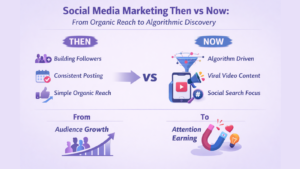
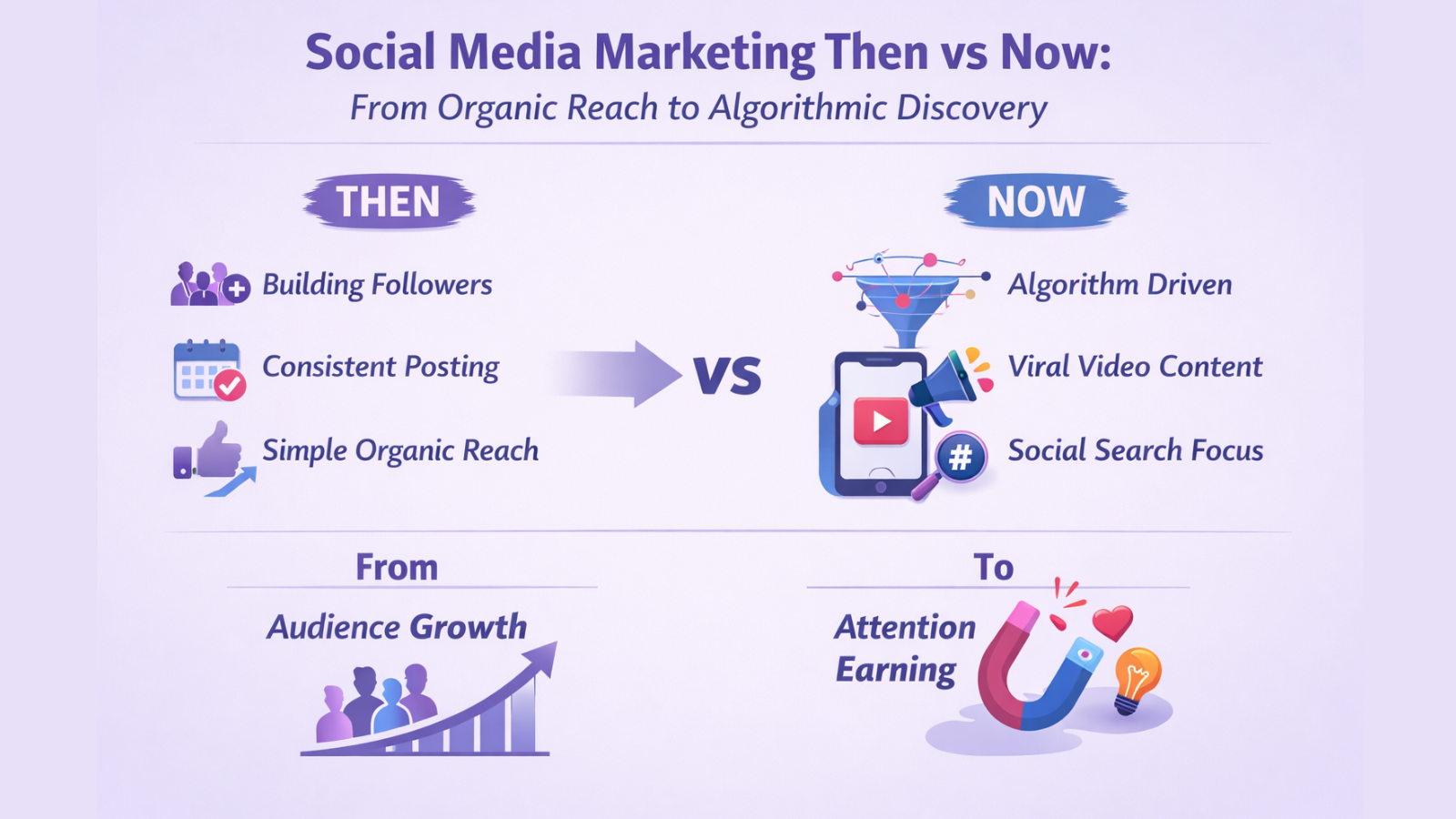
You posted consistently, used the right hashtags, built followers, and expected a decent amount of organic reach in return. Visibility was mostly tied to when you posted and how many people followed you.
In 2026, that model is gone.
Today, social platforms are driven by algorithmic discovery. Your content is no longer shown mainly because someone follows you. It is shown because the platform believes it is relevant, engaging, shareable, or likely to keep users on-platform. Sprout Social’s 2026 research describes social as increasingly shaped by unpredictable algorithm shifts, while HubSpot says brands now need more personalized, channel-specific content to stand out.
That is the biggest shift:
social media moved from audience ownership to attention earning.
Then, success meant building a page and growing followers.
Now, success means creating content that algorithms want to distribute.
This is also why social search matters more than ever. HubSpot reports that 84% of marketers believe consumers will search for brands on social media this year, and 31% of consumers already use social media to find answers to their questions. Among Gen Z and millennials combined, 49% prefer social search over traditional search engines.
So what does that mean for marketers?
It means social content now has to do more than “show up.” It has to be:
- relevant to platform behavior,
- optimized for discovery,
- engaging enough to trigger shares or saves,
- and clear enough to win attention quickly.
Platform mechanics reflect that change. For example, Sprout Social’s 2026 Instagram algorithm update says different surfaces rank content differently, and signals like views, private sharing, and originality now matter heavily for discovery.
The practical takeaway is simple:
Then: social media rewarded consistency and follower growth.
Now: social media rewards relevance, originality, and discoverability.
The brands winning today are not just posting more. They are building content for how platforms distribute attention now: short-form video, social search intent, platform-native storytelling, and audience interaction.
Because in 2026, the question is no longer, “How many followers do we have?”
It is, “Will the algorithm decide we are worth showing?”