
In 2026, B2B marketing budgets are under more scrutiny than ever. Leadership is no longer asking how much you can spend — they’re asking what return each dollar will deliver.
That shift makes one thing clear: data is no longer a support function in marketing. It is the decision engine.
If you want to allocate your budget effectively this year, you need a structured, data-driven approach that connects spend directly to business outcomes.
Why Data-Led Budgeting Matters in 2026
B2B buyers are more informed, buying cycles are longer, and competition is sharper. At the same time, companies are demanding:
- Faster pipeline impact
- Clear ROI justification
- Better alignment with revenue goals
This means traditional budgeting methods — based on past performance or intuition — are no longer enough.
The winning approach: prioritize marketing spend based on real, current data signals.
Step 1: Start With Revenue, Not Channels
Most teams make the mistake of starting with channels (SEO, ads, events). Instead, begin with revenue outcomes.
Ask:
- Which channels contributed most to pipeline last year?
- Which campaigns influenced closed deals?
- Where are we seeing the highest conversion rates?
Use CRM and attribution data to identify:
- Pipeline contribution by channel
- Cost per opportunity
- Revenue per campaign
👉 The goal is simple: fund what drives revenue, not just traffic.
Step 2: Identify High-Intent Buyer Signals
Not all leads are equal. In 2026, prioritization depends on intent data and behavioral signals.
Look at:
- Website behavior (pricing page visits, demo requests)
- Content engagement (case studies vs blog posts)
- Account-level activity (multiple stakeholders engaging)
Segment your data into:
- High-intent accounts
- Mid-funnel evaluators
- Early-stage awareness
👉 Allocate more budget toward channels and campaigns that attract high-intent buyers, not just volume.
Step 3: Analyze Efficiency Metrics (Not Just Volume)
Many B2B teams still optimize for impressions or leads. That’s outdated.
Instead, focus on:
- Customer Acquisition Cost (CAC)
- Pipeline velocity
- Conversion rates by stage
- Cost per qualified lead (SQL, not MQL)
Example:
- Channel A generates 1,000 leads but low conversion
- Channel B generates 200 leads but higher deal closure
👉 Channel B should get more budget — because efficiency beats scale.
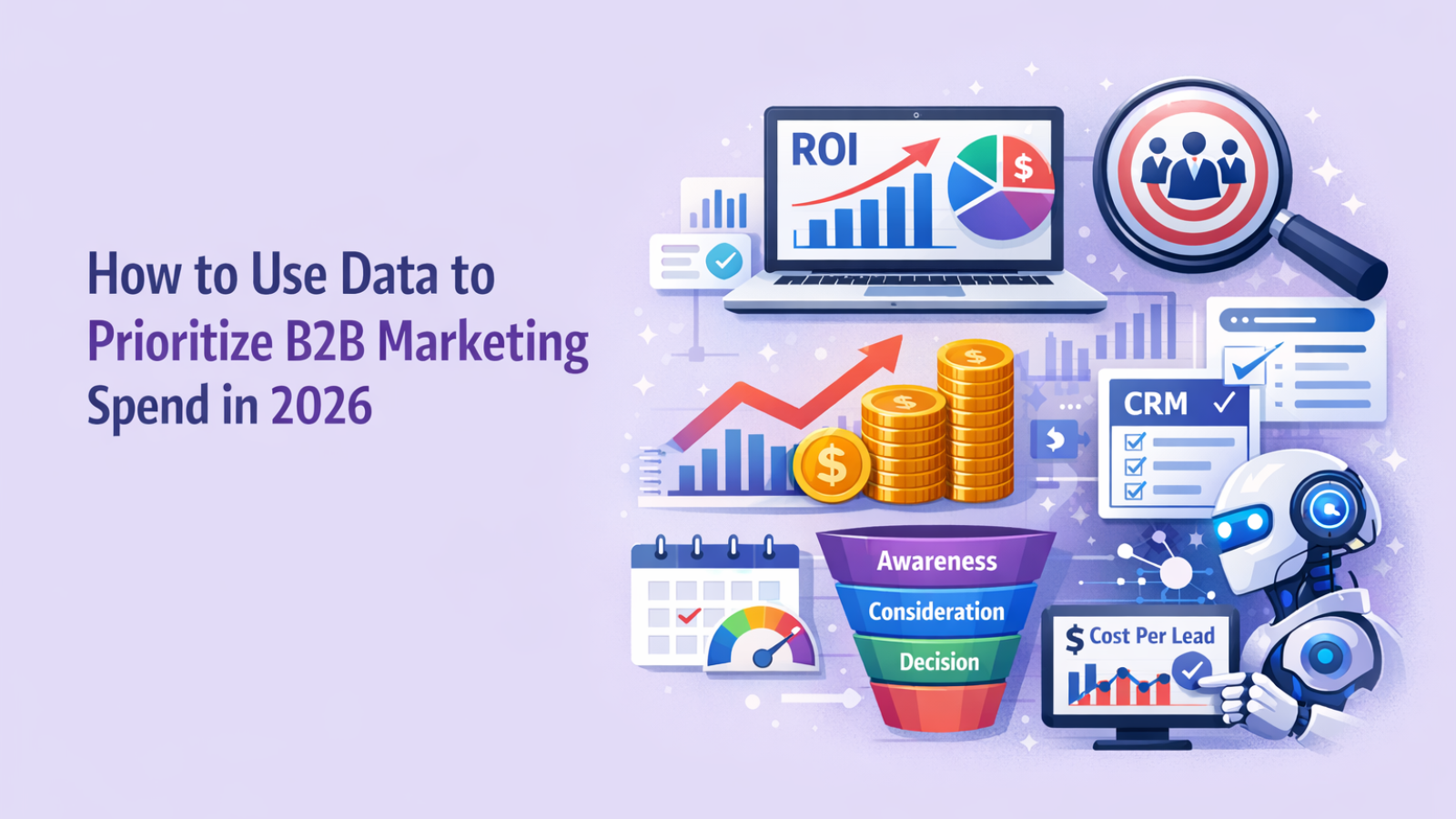
Step 4: Map Spend to the Buyer Journey
In 2026, effective budget allocation aligns with how buyers actually make decisions.
Break your spend into:
- Awareness (SEO, thought leadership)
- Consideration (case studies, comparison content)
- Decision (demos, ROI content, sales enablement)
Then ask:
- Where are deals getting stuck?
- Which stage needs more support?
👉 If pipeline is strong but conversions are weak, shift spend toward decision-stage content, not awareness.
Step 5: Use Predictive and AI-Driven Insights
AI is transforming how B2B teams analyze data.
Modern tools can:
- Predict which accounts are likely to convert
- Recommend budget allocation based on past performance
- Identify underperforming campaigns early
But here’s the key:
AI should inform decisions, not replace strategy.
👉 Combine AI insights with business context to make smarter investment choices.
Step 6: Continuously Reallocate Budget
Budget planning is no longer a once-a-year activity.
In 2026, high-performing teams:
- Review performance monthly or quarterly
- Shift budget toward winning channels quickly
- Cut underperforming campaigns early
👉 Treat your budget like a dynamic system, not a fixed plan.
Common Mistakes to Avoid
- Prioritizing channels based on trends instead of data
- Focusing on lead volume instead of revenue impact
- Ignoring mid- and bottom-funnel performance
- Delaying budget adjustments
Final Thought
Using data to prioritize B2B marketing spend is not about having more dashboards.
It’s about making better decisions faster.
In 2026, the teams that win are not the ones with the biggest budgets —
they are the ones who know exactly where to invest for impact.
Because in modern B2B marketing,
data is not just insight — it’s your competitive advantage.