
When people think about electric vehicles, passenger cars usually come to mind. But the real transformation is happening behind the scenes in logistics.
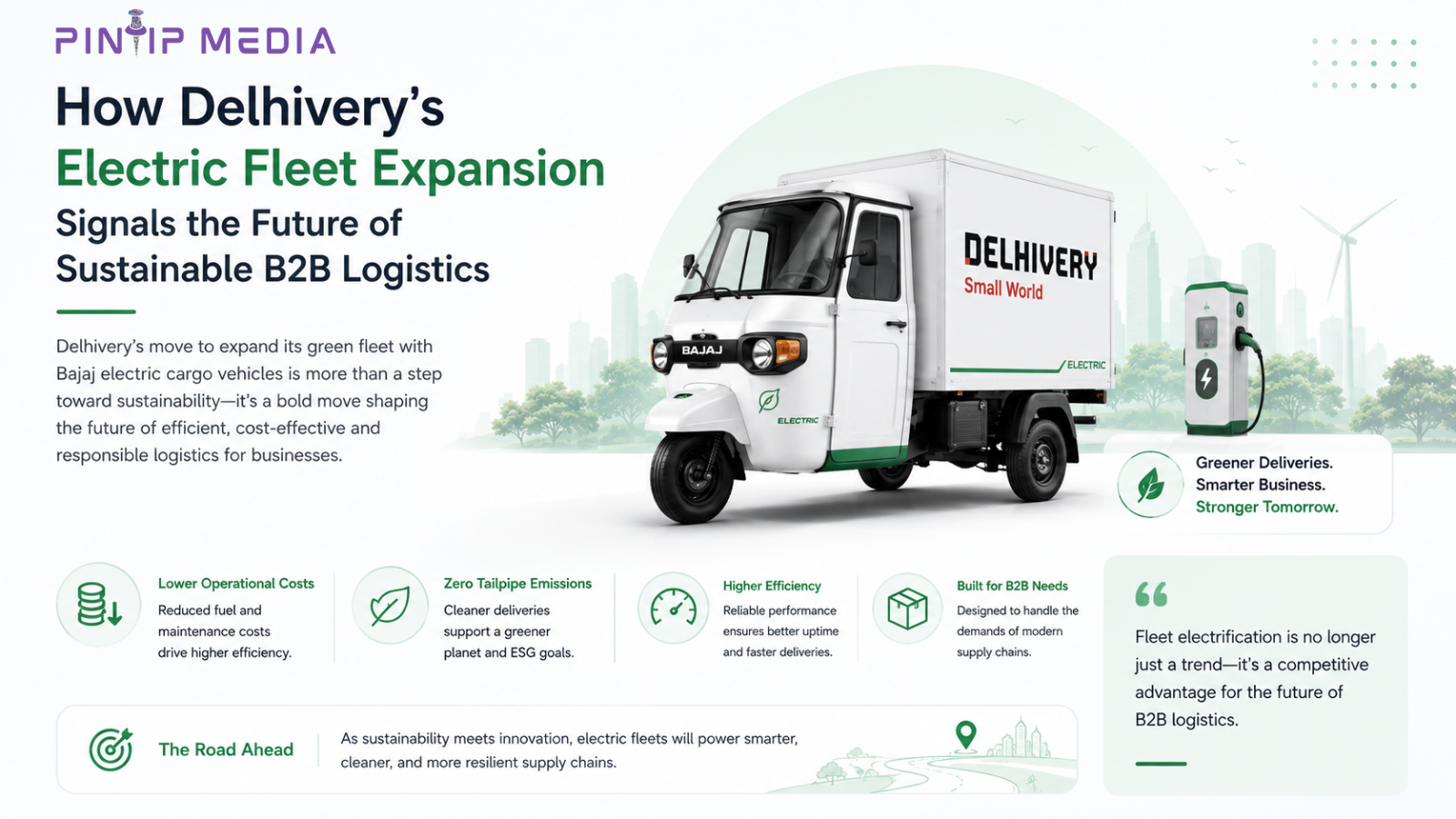
Delhivery’s recent move to expand its green fleet with Bajaj electric cargo vehicles isn’t just another sustainability announcement. It’s a clear sign that B2B logistics is entering a new era where efficiency and environmental responsibility go hand in hand.
More Than a Sustainability Initiative
For logistics companies, fleet decisions are driven by numbers. Fuel costs, maintenance, uptime, and delivery speed all impact profitability. Electric cargo vehicles check several of those boxes.
They reduce fuel expenses, require less maintenance due to fewer moving parts, and produce zero tailpipe emissions. For companies managing thousands of last-mile deliveries every day, even small operational savings can add up quickly.
Why This Matters for B2B Businesses
The pressure on logistics providers has never been higher. Customers expect faster deliveries, businesses want lower shipping costs, and investors are paying closer attention to sustainability goals.
By investing in electric cargo vehicles, companies like Delhivery aren’t just reducing their carbon footprint they’re building a logistics network that’s more cost efficient and future ready. It’s a strategy that helps balance operational performance with long term environmental commitments.
A Shift the Industry Can’t Ignore
Fleet electrification is no longer just an experiment. It’s becoming a competitive advantage.
As charging infrastructure improves and electric vehicle technology continues to evolve, more logistics providers are likely to follow the same path. Businesses that adapt early will be better positioned to meet growing customer expectations while keeping operating costs under control.
The Bottom Line
Delhivery’s partnership with Bajaj marks more than an expansion of its delivery fleet. It reflects a broader shift in how B2B logistics companies are preparing for the future. Sustainability is no longer separate from business strategy it’s becoming a key driver of operational excellence.
For businesses that rely on logistics, the message is clear: the future of supply chains isn’t just faster it’s cleaner, smarter, and electric.