
In B2B organizations, marketing performance is increasingly measured by its contribution to pipeline and revenue. However, confusion often arises around two commonly used terms: marketing-sourced pipeline and marketing-influenced pipeline.
Although they sound similar, they represent different types of impact. Understanding the distinction is essential for accurate reporting, better alignment with sales, and informed decision-making.
What Is Marketing-Sourced Pipeline?
Marketing-sourced pipeline refers to opportunities that originated directly from marketing efforts.
In simple terms, marketing created the initial engagement that eventually became a sales opportunity.
Examples include:
- A prospect downloads a whitepaper and later books a demo
- A webinar attendee converts into an opportunity
- A paid ad generates a lead that moves into the pipeline
In these cases, marketing is credited with “sourcing” the opportunity because it initiated the relationship.
This metric is often used to evaluate how effectively marketing generates new demand.
What Is Marketing-Influenced Pipeline?
Marketing-influenced pipeline includes opportunities where marketing played a role in advancing or supporting the deal, even if marketing did not generate the original lead.
For example:
- A sales representative reaches out to a target account
- The prospect later engages with case studies, emails, or webinars
- Marketing touchpoints help build trust before the deal closes
Here, marketing did not start the conversation — but it contributed to nurturing and strengthening it.
Influence reporting acknowledges that modern B2B buying journeys are rarely linear. Multiple touchpoints across marketing and sales shape the final outcome.
Why the Distinction Matters
B2B sales cycles are long and often involve several stakeholders. It is common for prospects to interact with marketing assets at different stages — before, during, and after sales conversations.
If organizations only measure marketing-sourced pipeline, they may overlook a significant portion of marketing’s impact.
On the other hand, relying only on influenced metrics can blur accountability if definitions are not clearly established.
A balanced view provides a more realistic understanding of contribution.
Key Differences at a Glance
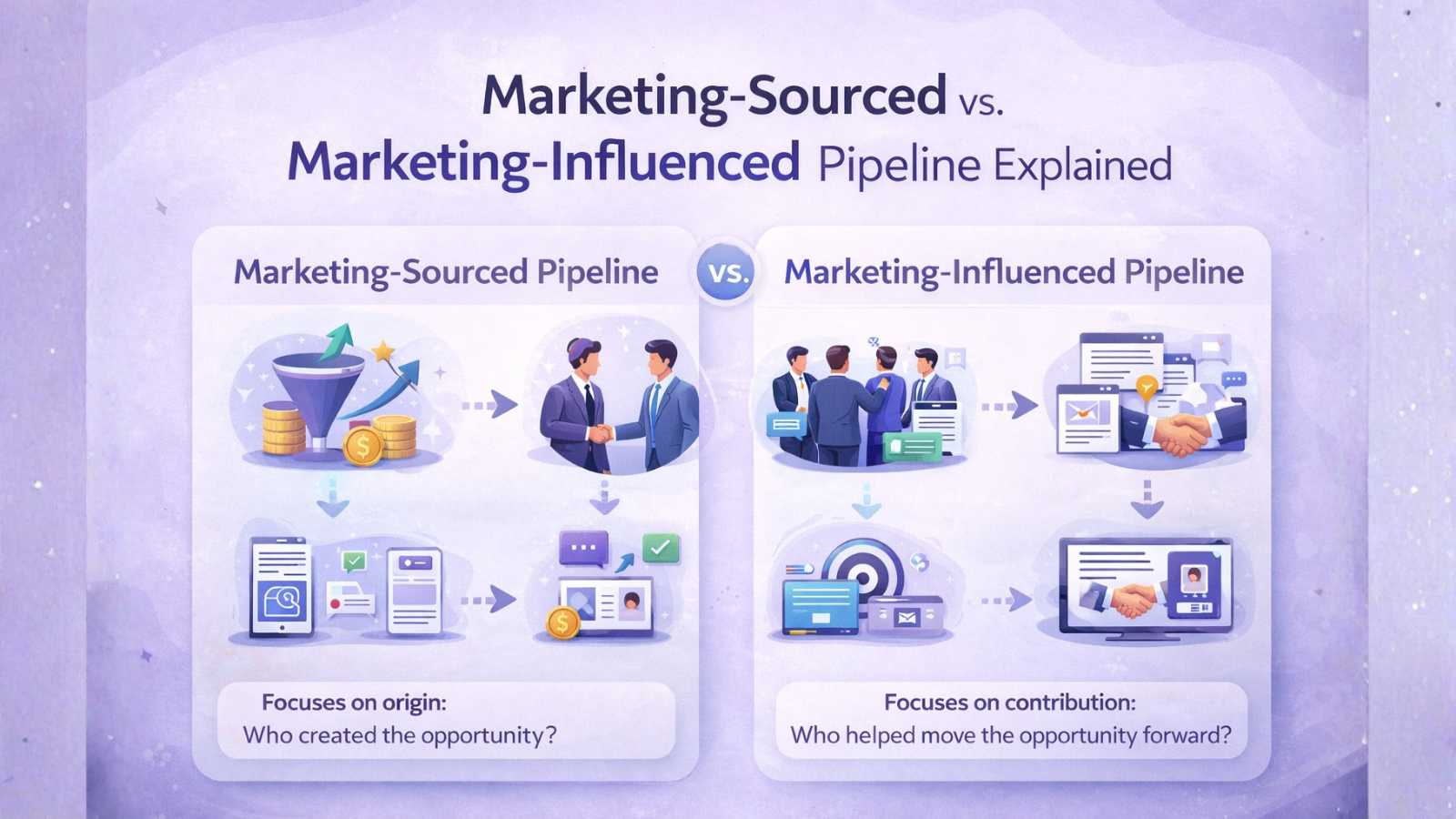
- Marketing-Sourced Pipeline
Focuses on origin.
Answers: Who created the opportunity? - Marketing-Influenced Pipeline
Focuses on contribution.
Answers: Who helped move the opportunity forward?
Both metrics serve different purposes. Sourced pipeline measures demand creation. Influenced pipeline measures engagement and deal support.
Practical Considerations
To use these metrics effectively:
- Establish clear definitions agreed upon by both marketing and sales.
- Maintain accurate tracking of touchpoints and lifecycle stages.
- Use multi-touch attribution models where possible.
- Focus on trends over time rather than isolated numbers.
The objective is not to assign credit for its own sake, but to understand where investment drives meaningful results.
Conclusion
Marketing-sourced and marketing-influenced pipeline metrics reflect two sides of the same reality: B2B growth is collaborative.
Marketing may initiate demand, nurture interest, or strengthen trust during evaluation. Recognizing both sourcing and influence allows organizations to assess impact more comprehensively and make better strategic decisions.
In the end, pipeline contribution is less about ownership and more about alignment.